
The Blueprint
Economy & Resources
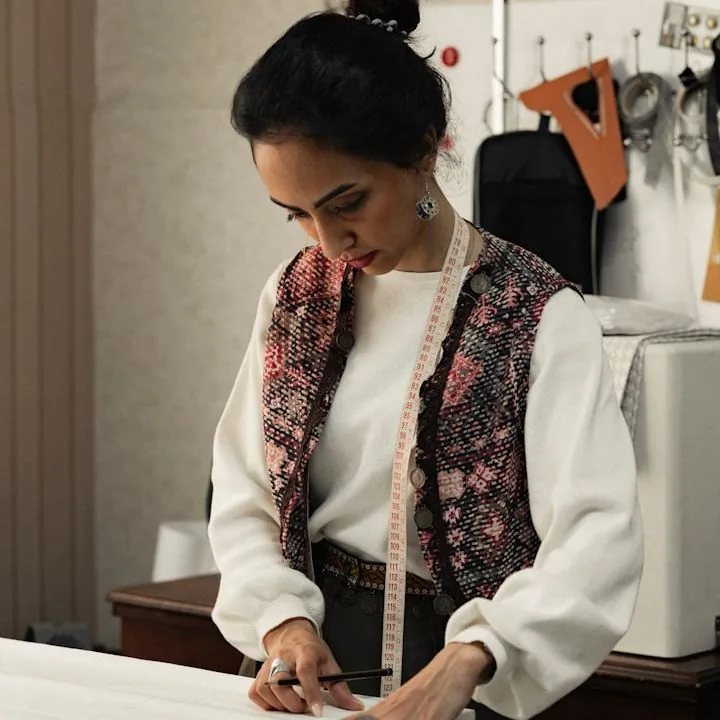
Now, the fact is that not everyone can do everything and has to make use of the services of others. Because doing everything oneself would be counterproductive, as certain inequalities would arise again here and the effort would be disproportionately greater. And this tipping point is where we start. So what we lack, or what we cannot cover through the work of our own hands, is outsourced to the economy. It must be defined what gap arises and how it can be closed. That means that, as before, we must be able to purchase certain goods and services for the calculated standard of living. Industrial production, trade and various trades will be needed, and thus there will also be money. Money is quite a sensible medium of exchange here. And not everyone is a midwife, electrician, gardener, hairdresser, baker, chiropodist, a gifted tailor, mechanic, farmer or teacher. With this thought the money circuit is installed and would set our economic circuit in motion.
Society of Enough
New raw materials are used only where something is really lacking, not to satisfy artificially created needs and wishes.
The people of this world know that prosperity means not possessions, but time, security and meaning. Instead of constantly building new things, existing structures are repurposed. Status arises not through consumption, but through contribution: Whoever repairs, tends, shares or passes on knowledge is highly regarded.
Production is needs-oriented:
- less,
- slower,
- but of higher quality.
Education teaches:
"Everything you use has a history – and a future."
Wealth for the people
Zivilisation 0 works because it lives a simple insight: If we consume less than is regenerated, time itself becomes our greatest wealth.
A world of true circulation
A world in which under-consumption does not mean renunciation
but wise moderation.
In this world nothing is produced that cannot be used multiple times. All things – houses, clothing, tools, machines – are designed so that they can be repaired, converted and passed on. Waste hardly exists anymore, because everything is either biodegradable or fully recyclable. Raw materials from the first year circulate through the system again and again. In the third year, people do not use new resources, but the same materials in a new form. The result would be an economy without a compulsion to grow. The economy no longer measures success by growth, but by stability, longevity and benefit per resource. Businesses earn money by keeping things functional for a long time, not by replacing them quickly. Energy comes almost entirely from renewable sources and is generated locally. As a result, energy can flow abundantly, while materials deliberately remain limited.
Cradle to Cradle
It was coined above all by the chemist Michael Braungart and the architect William McDonough. At its core it is an alternative understanding of how people design, produce and use products and how they should be embedded in the natural world.
Sustainability and design
The "Cradle to Cradle" worldview (C2C, "from cradle to cradle") is a holistic, positive approach to sustainability and design that goes far beyond classic patterns of thinking about recycling or efficiency.
no waste
The Cradle to Cradle worldview is a vision of a sustainable, regenerative economy that eliminates waste completely,
Nature as a model (biomimicry)
1. Model
Instead of exploiting nature as a resource, C2C sees it as a model. In natural systems there is no waste: All substances are transferred from one system to another. Organisms that die become food for new ones. C2C deliberately applies this principle to products and materials.
2. Waste
In C2C thinking there is no waste in the classical sense. Materials are designed so that at the end of their life they flow back into biological or technical cycles.
Biological nutrients: Materials that are fully biodegradable and improve the environment (e.g. compostable items).
Technical nutrients: Materials that can be endlessly reused or recycled without losing quality (e.g. pure aluminum, high-quality plastics that are collected separately).
3. Positive impact instead of damage limitation
While traditional sustainability approaches often emphasize reducing harm (e.g. less CO₂, less waste), C2C wants to create positive effects:
Products should not merely be less bad, but good for people and the environment. For example emission-free production processes, pollutant-free materials, regenerative energy.
4. Design for reuse
Products and buildings are designed from the start so that they: are easy to dismantle; materials remain clearly separated and recyclable; are durable and adaptable.
Instead of "throw away and buy new," it is about lasting use and systematic recovery.
5. Renewable energies & social responsibility
C2C takes into account not only material design, but also energy sources (e.g. 100 % renewable energy in production), social aspects (e.g. fair working conditions), healthy living environments (e.g. pollutant-free interior design).
6. Holistic systems thinking
The C2C worldview does not view products in isolation. Value chain, ecosystems, consumers, reuse — everything is connected. The goal is an "ecological footprint" of zero or even positive.